A Contemporary Tribute to a Ming Dynasty Master
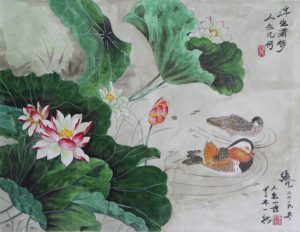
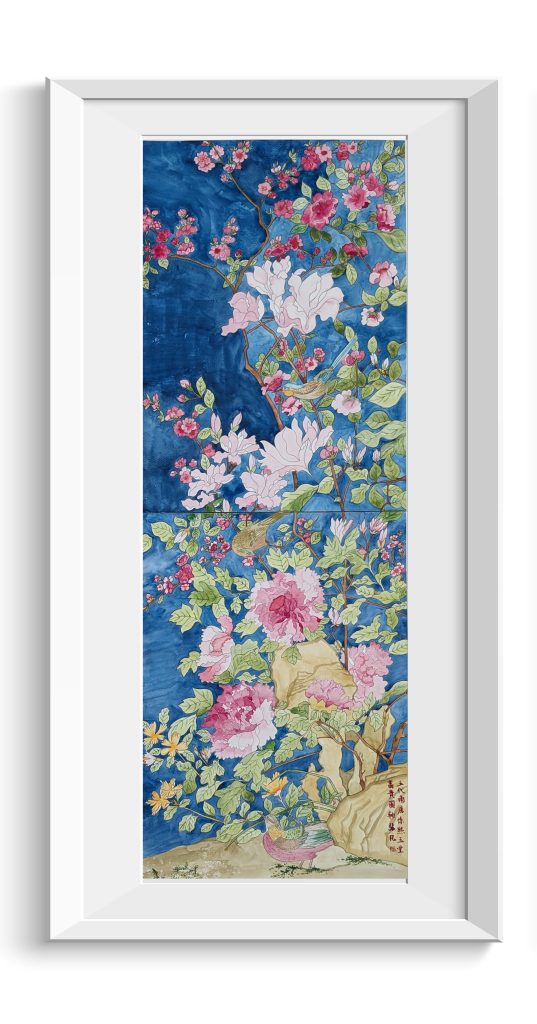
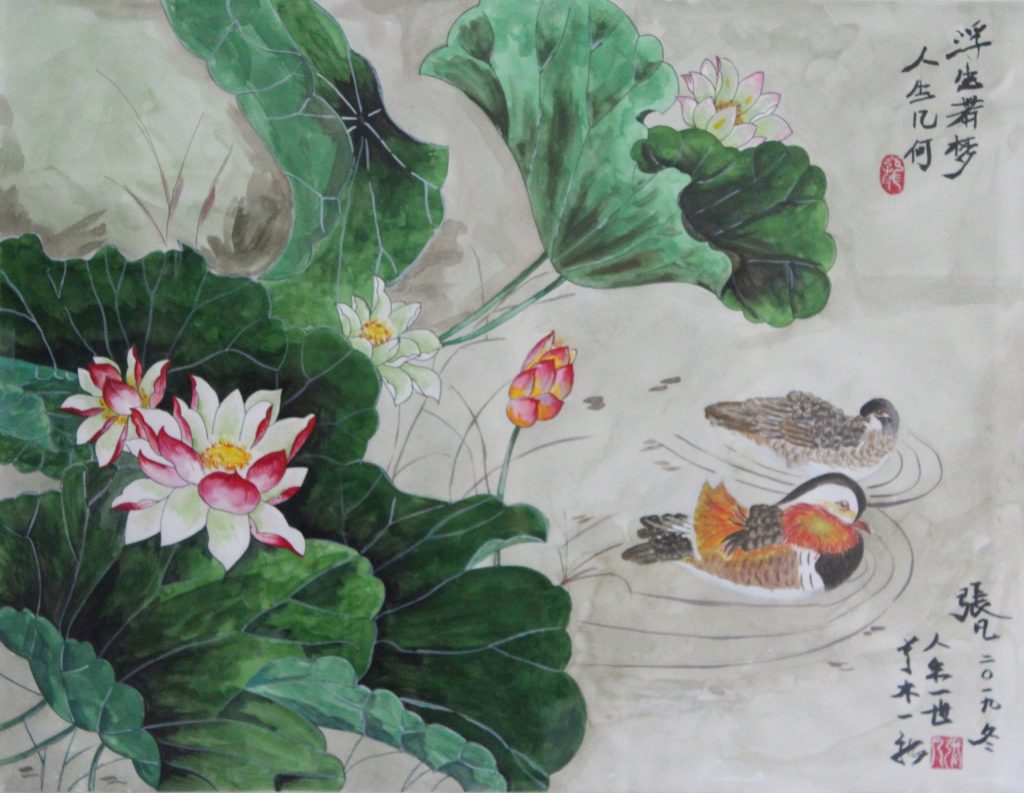
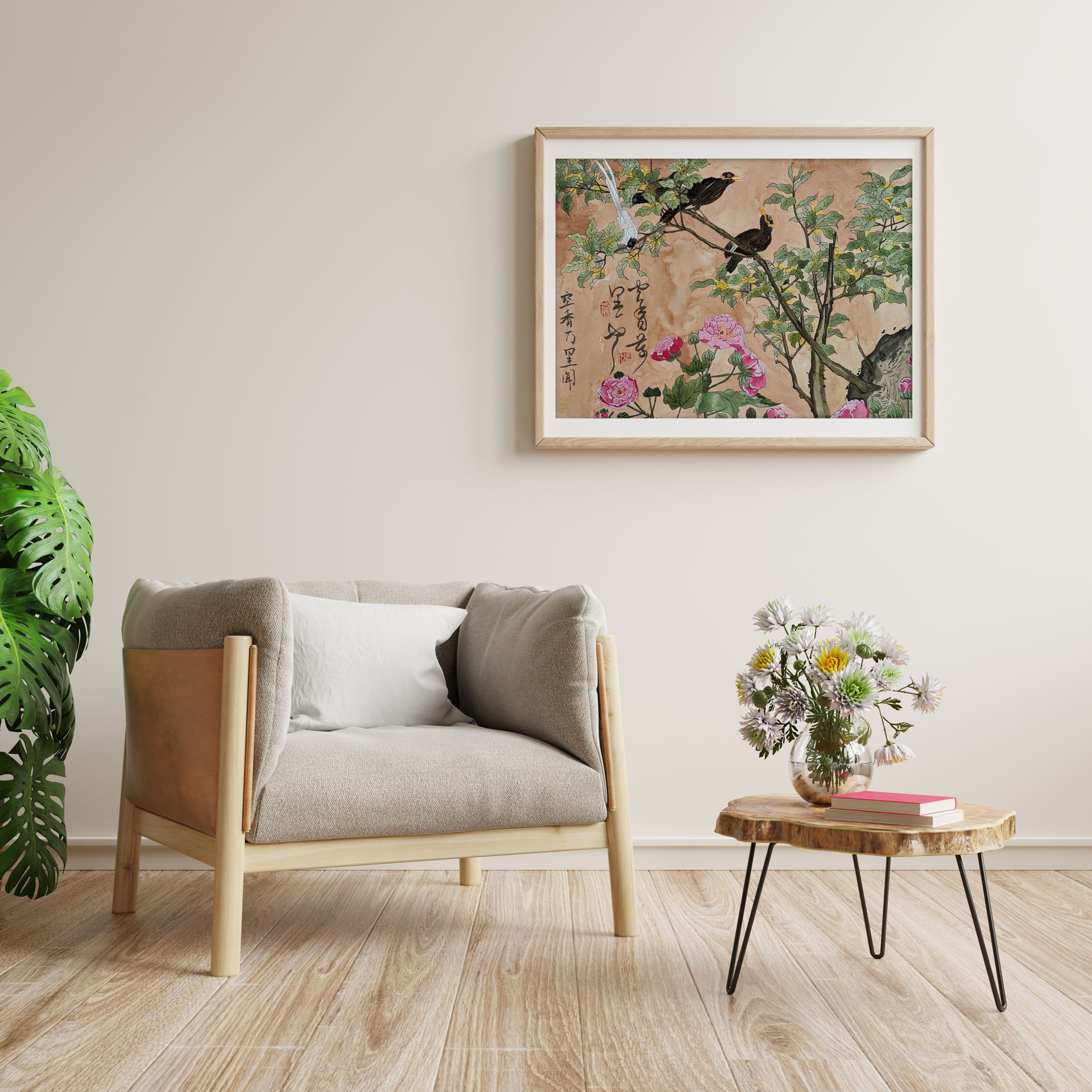
Four Seasons Flowers and Birds – Autumn, Ming Dynasty Lu Ji (吕纪) is a watercolor work inspired by one of the great traditions of Chinese painting: the flower-and-bird genre. Available from Art 4 MA, this signed 18” x 24” watercolor is offered unframed and brings a celebrated Ming Dynasty visual language into a contemporary home, studio, or contemplative space.
The artist describes being deeply moved by the beauty of Lü Ji’s work and feeling compelled to recreate Four Seasons Flowers and Birds – Autumn. The piece also includes a personal calligraphy element titled “Kong xiang wangli wen,” translated on the product page as “Smell the fragrance from the distant sky,” along with seals representing the artist’s name and the word “dragon.”
Who Was Lü Ji?
Lü Ji, also written Lu Ji or Lü Chi, was one of the most admired bird-and-flower painters of the Ming Dynasty. Museum sources place him among the leading court painters active from the late 1400s into the early 1500s, a period when Chinese court painting combined technical mastery, symbolic imagery, and refined decorative power. The Tokyo National Museum describes Lü Ji as an “illustrious bird-and-flower painter of the Ming-dynasty court,” noting that his work is representative of Ming Dynasty China.
The Metropolitan Museum of Art similarly emphasizes Lü Ji’s importance at court, describing one of his paintings as evidence of why he became “the most revered bird-and-flower painter” at the court of the Hongzhi Emperor, who ruled from 1488 to 1505. His paintings were not quiet background decoration; they were vivid, courtly, symbolic works meant to bring the vitality of nature into refined architectural interiors.
The Meaning of Flower-and-Bird Painting
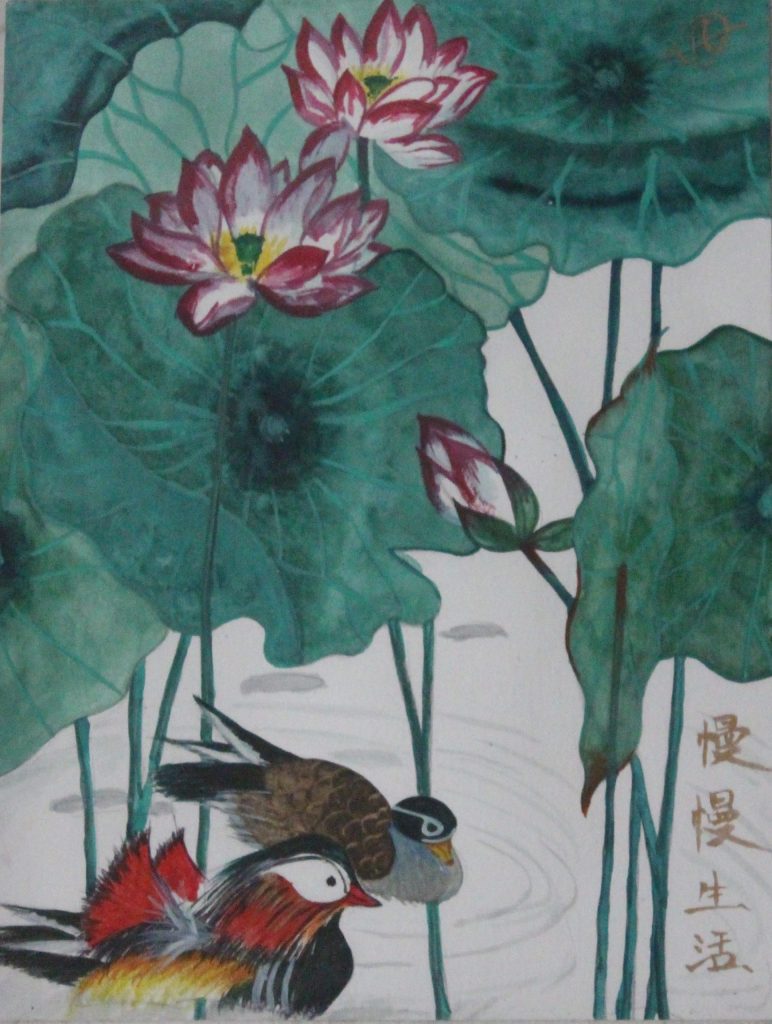
In Chinese art, flower-and-bird painting is far more than botanical or animal illustration. Birds, flowers, trees, rocks, water, and seasonal plants often carry poetic, moral, or auspicious meanings. A pair of mandarin ducks might suggest marital harmony; chrysanthemums may evoke autumn, resilience, or cultivated retreat; peonies can suggest prosperity; cranes may symbolize longevity.
The National Palace Museum explains that bird-and-flower painting developed through a long dialogue between nature, technical refinement, symbolism, and artistic imagination. In the Ming and Qing dynasties, artists continued to reinterpret earlier traditions, combining observation of nature with metaphor, composition, and expressive brushwork.
This historical background helps explain why Lü Ji’s work remains compelling. His paintings are beautiful at first glance, but they also invite slower looking. They belong to a tradition in which nature is never merely nature. A branch, bird, blossom, or season can become a visual poem.
Why Autumn Matters
Autumn occupies a special place in East Asian art and poetry. It is the season of ripeness, decline, fragrance, memory, and transformation. Unlike spring, which often suggests youth and renewal, autumn carries emotional depth. It is beautiful because it is temporary. Its colors are rich, but they also signal change.
That makes Four Seasons Flowers and Birds – Autumn especially resonant. A seasonal painting does not simply show a time of year; it reflects a way of feeling time. In the context of a four-season composition, autumn becomes part of a larger meditation on cyclical life: flowering, flourishing, fading, and returning.
The Tokyo National Museum identifies Lü Ji’s Birds and Flowers of the Four Seasons as a Ming Dynasty masterpiece characterized by gorgeous color, a well-organized composition, and birds and flowers “full of life and vitality.”
Lü Ji’s Style: Precision, Color, and Life
Lü Ji’s flower-and-bird paintings are known for their combination of meticulous detail and animated vitality. The Art 4 MA product description notes that Lü Ji worked in two major modes: one using fine brushwork and vivid colors, often with magnificent birds such as phoenixes, cranes, peacocks, and mandarin ducks; the other using freer ink-and-wash techniques with simpler, more expressive brushwork.
This duality is part of his enduring appeal. His work can feel both disciplined and alive. The birds are carefully observed, but not stiff. The compositions are formal, but not lifeless. The colors are rich, but not merely decorative. Lü Ji’s best paintings create the impression that nature has been arranged by intelligence without losing its movement.
A Painting with a Long Cultural Echo
Lü Ji’s influence extended beyond the Chinese imperial court. The National Gallery of Victoria notes that his bird-and-flower paintings were admired not only in China but also in Japan, where they influenced the development of local painting traditions, including the Kano school.
That cross-cultural influence is important. It shows that Lü Ji’s art was not confined to one dynasty or one courtly environment. His paintings became part of a larger East Asian visual vocabulary: birds, flowers, branches, rocks, and seasonal atmosphere arranged with elegance, symbolic density, and technical command.
Why This Watercolor Belongs in a Contemporary Space
This Art 4 MA watercolor is not simply an image of birds and flowers. It is a contemporary conversation with Ming Dynasty art. It allows the viewer to enjoy the elegance of classical Chinese painting through a modern handmade work, while the added calligraphy and seals give the piece a personal, reflective dimension.
For collectors, it offers an accessible way to bring Chinese art history into the home. For lovers of nature, it offers a quiet seasonal image. For those drawn to Asian aesthetics, calligraphy, and contemplative art, it carries the feeling of a visual poem: autumn fragrance, distant air, birds, flowers, and memory.
Whether displayed in a living room, reading corner, meditation space, office, or studio, Four Seasons Flowers and Birds – Autumn brings more than decoration. It brings a lineage: Ming Dynasty court painting, flower-and-bird symbolism, seasonal reflection, and the handmade sensitivity of watercolor.
Bring Home a Piece Inspired by Ming Dynasty Elegance
If you are looking for art with historical depth, poetic atmosphere, and a refined connection to Chinese painting, Four Seasons Flowers and Birds – Autumn, Ming Dynasty Lu Ji (吕纪) is a meaningful choice.
This signed 18” x 24” watercolor is available for collectors who want a work that is beautiful, thoughtful, and rooted in one of the most enduring traditions of East Asian art.
Explore the artwork and add a historically inspired piece to your collection today.